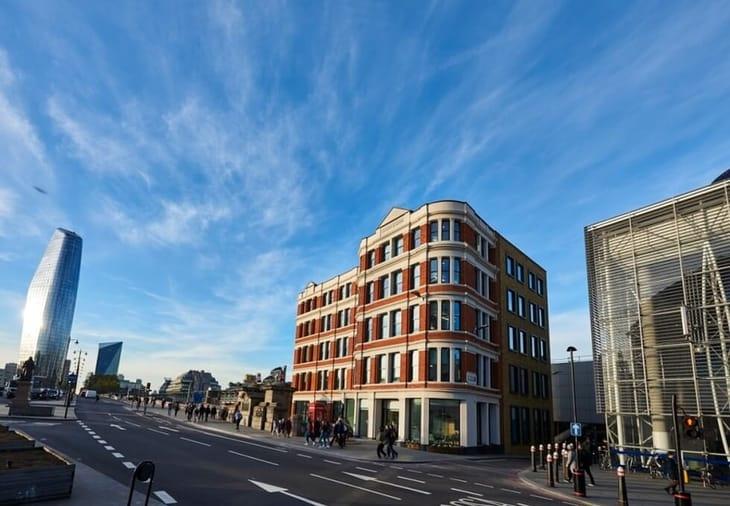
Blackfriars sits on the Thames at the western side of the City of London. Its identity combines a rail interchange, a bridge crossing and a business neighbourhood connected with Fleet Street, St Paul’s and the river. Offices here can occupy very different settings, from major road frontages to smaller streets and buildings close to the waterfront.
The area is useful to understand as a point of connection rather than a single enclosed district. The City, legal quarter and South Bank each contribute to its working context. This guide considers how those relationships shape everyday office life.
Blackfriars’ identity within Central London
The river and station are the clearest reference points. They give Blackfriars a recognisable position within London while connecting it to destinations beyond the immediate neighbourhood. The surrounding office streets retain a commercial identity closely related to the western City.
Blackfriars also sits near the transition towards Fleet Street and the legal district. That position introduces a different atmosphere from the eastern City’s tower cluster. Historic lanes and institutional connections coexist with substantial modern workplaces.
Business culture and professional atmosphere
The area can support businesses working with City clients, legal advisers and other central professional networks. Its station and bridge connections may also be relevant where colleagues or visitors arrive from different directions. A workplace here can function as a base for meetings across several adjoining districts.
There is no single Blackfriars office culture. Larger managed buildings, smaller team spaces and self-contained accommodation can create different experiences. Reception arrangements, shared facilities and the internal layout are more reliable indicators of working style than the area name.
Architectural character and building form
Blackfriars combines stone and brick commercial buildings, later office blocks and contemporary development. The river introduces open views on some frontages, while nearby lanes can feel much more enclosed. Major roads and changes in level also shape the streetscape.
An office near the Thames does not necessarily have a river outlook. Rear rooms, internal courts and neighbouring buildings can produce different conditions within the same address. Teams should assess natural light, floor depth and acoustic performance alongside the attraction of the wider setting.
Day-to-day working environment
Commuter movement is concentrated around the station and bridge approaches. Main roads carry traffic and deliveries, while pedestrian routes link offices with the river and surrounding commercial streets. Busy junctions can be a significant part of the daily arrival.
Away from those approaches, smaller streets provide a different scale and pace. Staff can use local cafés and shops, or take a walk towards the waterfront. The convenience of these options depends on the building entrance and the available crossings rather than a simple distance from the station.
Relationship with surrounding districts
Fleet Street and the legal quarter lie to the west and north-west, while St Paul’s and the wider City extend to the east. Across the Thames, Bankside and the South Bank introduce a different cultural and public environment. These relationships are central to Blackfriars’ appeal.
A north-bank office and a south-bank office should nevertheless be assessed separately. The station spans the river, but the surrounding streets and final walks differ. Property descriptions using the same transport reference can therefore refer to quite different neighbourhood experiences.
Public realm and riverside space
The Thames provides an important outdoor dimension. Riverside routes offer a change of scene from the office streets and connect Blackfriars with other central districts. The experience varies along each bank, with different views, pedestrian flows and points of access.
Waterfront proximity does not remove the need to assess the route. Road crossings, steps and the position of entrances can influence how easily staff reach an outdoor space. Private terraces and building amenities should be distinguished from public riverside access.
Cultural and institutional presence
St Paul’s Cathedral is a major cultural and historic reference point within the wider neighbourhood. Across the river, Bankside’s institutions contribute a different public setting. Blackfriars connects with these places while retaining its own commercial role.
Fleet Street’s historic associations add another layer to the area’s identity. The streets reflect successive periods of institutional and business use rather than one single development phase. For office occupiers, that layered setting provides context beyond a purely functional transport location.
Hospitality and meeting context
Cafés, restaurants, pubs and hotels serve workers and visitors around the station, Fleet Street and the waterfront. The range allows teams to choose between a convenient short meeting and a more planned setting nearby. The two banks of the river broaden the options.
A scenic or busy venue is not automatically suitable for detailed discussion. Teams should consider booking reliability, privacy and noise alongside the setting. Internal meeting rooms remain important for confidential work and presentations, even where hospitality is readily available.
Accessibility and movement
Blackfriars brings together Thameslink rail services and the Circle and District Underground lines. The rail station has entrances on both sides of the Thames, while the Underground access is on the north bank. This distinction matters when planning the final walk to an office.
Other nearby stations may be useful for particular addresses and journeys. Transport for London’s journey planner helps compare routes from actual starting points. Within the neighbourhood, walking can connect meetings across the City and river, subject to the relevant crossings.
Who Blackfriars aligns with
Blackfriars can suit teams seeking a base between the City, legal quarter and South Bank. It may be especially useful where colleagues arrive through the north-south rail network or where regular meetings span both sides of the river.
Its suitability is still specific to the building. Businesses seeking a quiet frontage should examine the relationship with main roads and station routes. Those prioritising a particular view or outdoor routine should verify what the actual accommodation provides.
Blackfriars’ continuing role
The combination of rail, river crossing and central business relationships gives Blackfriars a clear role within London. Individual developments can change particular streets, but the area’s position continues to connect several distinct environments.
For a business considering a lasting base, that connectivity is useful alongside the building’s own adaptability. The best location is one where regular journeys and everyday working needs align with the office itself.
Blackfriars in context
Blackfriars offers a commercial setting with strong relationships to the Thames and neighbouring professional districts. Its character comes from those connections and from the differences between busy approaches, smaller streets and waterfront locations.
For a practical next step, you can view office space available in Blackfriars and compare the individual settings.