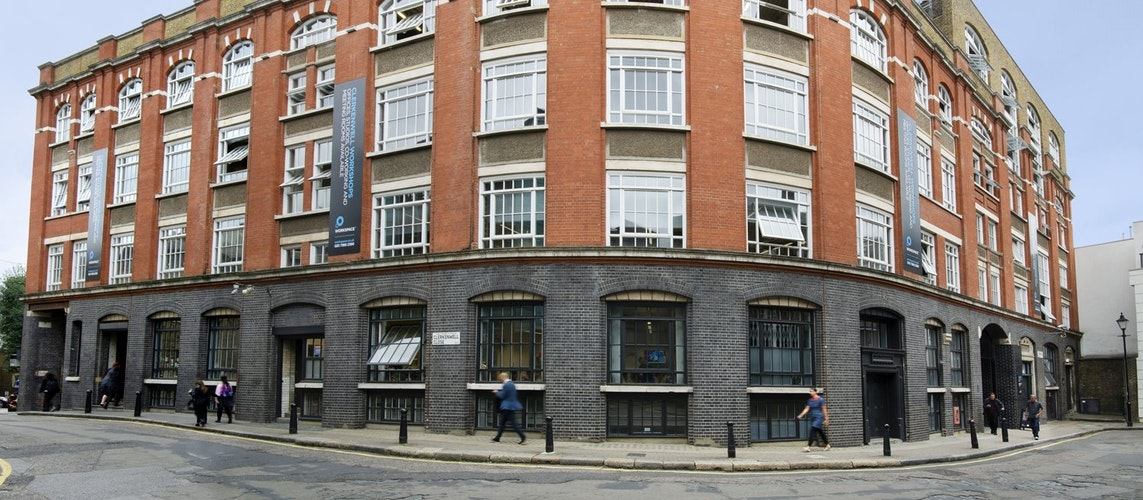
Clerkenwell lies north of the City of London, with a street pattern shaped by historic institutions, workshops, commercial buildings and residential life. Its association with architecture, interiors and design gives it a distinct professional identity. That identity is visible in showrooms and studios, but the wider neighbourhood includes many other kinds of workplace.
The area overlaps closely with Farringdon while extending further into a network of streets around Clerkenwell Green, St John Street and Clerkenwell Road. This guide considers its character as a place to work, with attention to the differences between its principal routes and smaller streets.
Clerkenwell’s identity within London
Clerkenwell is a working neighbourhood rather than a single planned business district. Buildings have accommodated different trades and uses over time, leaving a varied urban fabric. Offices sit alongside homes, hospitality and specialist commercial premises in a setting that retains activity beyond the working day.
Its design identity is important but should not obscure that variety. A showroom-facing street and a quieter residential edge can feel different, even within the same general catchment. Businesses benefit from understanding the immediate surroundings as well as the district’s broader reputation.
Business culture and professional atmosphere
Architecture, interiors and related industries contribute visible professional networks. Meetings can involve visiting a studio, reviewing materials in a showroom or discussing a project in a nearby café. The proximity of complementary businesses can make those interactions part of an ordinary working day.
Other occupiers use Clerkenwell for its location and building choice rather than a direct link to design. Professional teams and smaller businesses can work within the same neighbourhood. The atmosphere supports a range of styles, from independent studios to more structured office environments.
Architectural character and building form
Former workshops, warehouses, period commercial premises and contemporary offices create a varied streetscape. Brickwork and individual entrances are common visual features, while larger developments introduce different floorplates and shared facilities. The scale changes between main roads and smaller lanes.
Adapted buildings can offer character, but internal arrangements need careful assessment. Columns, changes of level and circulation routes can influence how a team uses the space. Daylight, acoustics and accessibility should be evaluated separately from the appeal of exposed materials or a distinctive façade.
Day-to-day working environment
The working day is woven into neighbourhood activity. Staff, residents, showroom visitors and hospitality customers share the streets. Some routes feel particularly busy around lunch or commuting periods, while others offer a more contained setting away from the main roads.
For office teams, local food and meeting options are an important part of the practical offer. The ability to step outside into a functioning neighbourhood can be useful, but convenience varies by address. An office further from the main commercial streets may have a different routine from one beside a cluster of venues.
Relationship with surrounding districts
Farringdon provides a close transport and commercial connection to the south-west. The City extends to the south, while routes towards Holborn, Bloomsbury and Islington connect Clerkenwell with other central neighbourhoods. These relationships help make the area useful beyond its own professional networks.
Clerkenwell and Farringdon are often mentioned together, but they are not identical descriptions. A building near Farringdon station may have a different final walk and street atmosphere from one further north or east. The actual location is more informative than the marketing catchment.
Public realm and outdoor space
Clerkenwell Green and smaller squares contribute to a sequence of outdoor places rather than one large park. Churchyard settings and quieter streets can provide routes for a break, while the broader district remains densely built. Public space is experienced at a neighbourhood scale.
Not every garden or enclosed ground is available without conditions. Staff should identify reliable public routes and seating near the office. The relationship between those spaces and the building entrance often matters more than a broad description of the area as leafy or walkable.
Cultural and institutional presence
Clerkenwell Design Week gives a public expression to the area’s design community through showrooms, exhibitions and events. It helps explain the professional identity of the neighbourhood and brings periods of additional activity to particular streets.
The Museum of the Order of St John provides a different connection with local history around St John’s Gate. Together, historic institutions and contemporary design activity show how several layers of use coexist within the same district.
Hospitality and meeting context
Restaurants, cafés and pubs offer a range of informal meeting settings. The streets around St John Street, Clerkenwell Green and the routes towards Farringdon provide different choices within a compact area. Teams can meet collaborators locally without making every discussion an office appointment.
That flexibility has limits. Busy dining periods and public tables are not ideal for confidential or technically detailed work. Businesses should assess dedicated meeting rooms alongside the surrounding hospitality, especially where presentations, materials or several participants are involved.
Accessibility and movement
Farringdon is an important transport reference point for much of Clerkenwell, with other stations relevant to addresses towards the edges of the district. The most convenient route depends on where the office sits and which services colleagues use.
Local trips can often be made on foot, though main roads and junctions affect directness. Transport for London’s journey planner helps compare journeys to the precise address. A general claim of proximity to Farringdon should be checked against the actual entrance and walking route.
Who Clerkenwell aligns with
Clerkenwell can suit teams that value a mixed neighbourhood, varied building character and proximity to creative and professional networks. It may be especially useful where face-to-face collaboration with nearby studios or suppliers forms part of the business.
It is not limited to those activities, and the right building remains central. Teams seeking a uniform corporate campus or a consistently quiet environment should examine individual streets and workplaces carefully. The district’s strengths lie in variety and local relationships.
Clerkenwell’s continuing role
Clerkenwell’s capacity to accommodate different uses is part of its enduring identity. Buildings and businesses change, while the relationship between work, residence and specialist commercial activity continues to shape the neighbourhood.
For organisations considering a longer-term base, that mix can be valuable alongside connections to the wider city. A location decision should still consider how the specific building supports changing team requirements and everyday journeys.
Clerkenwell in context
Clerkenwell combines a visible design community with a broader working neighbourhood and layered architectural history. Its appeal lies in the relationship between those elements, experienced through individual streets rather than one standard office setting.
For a practical next step, you can view office space available in Clerkenwell and compare individual buildings and locations.