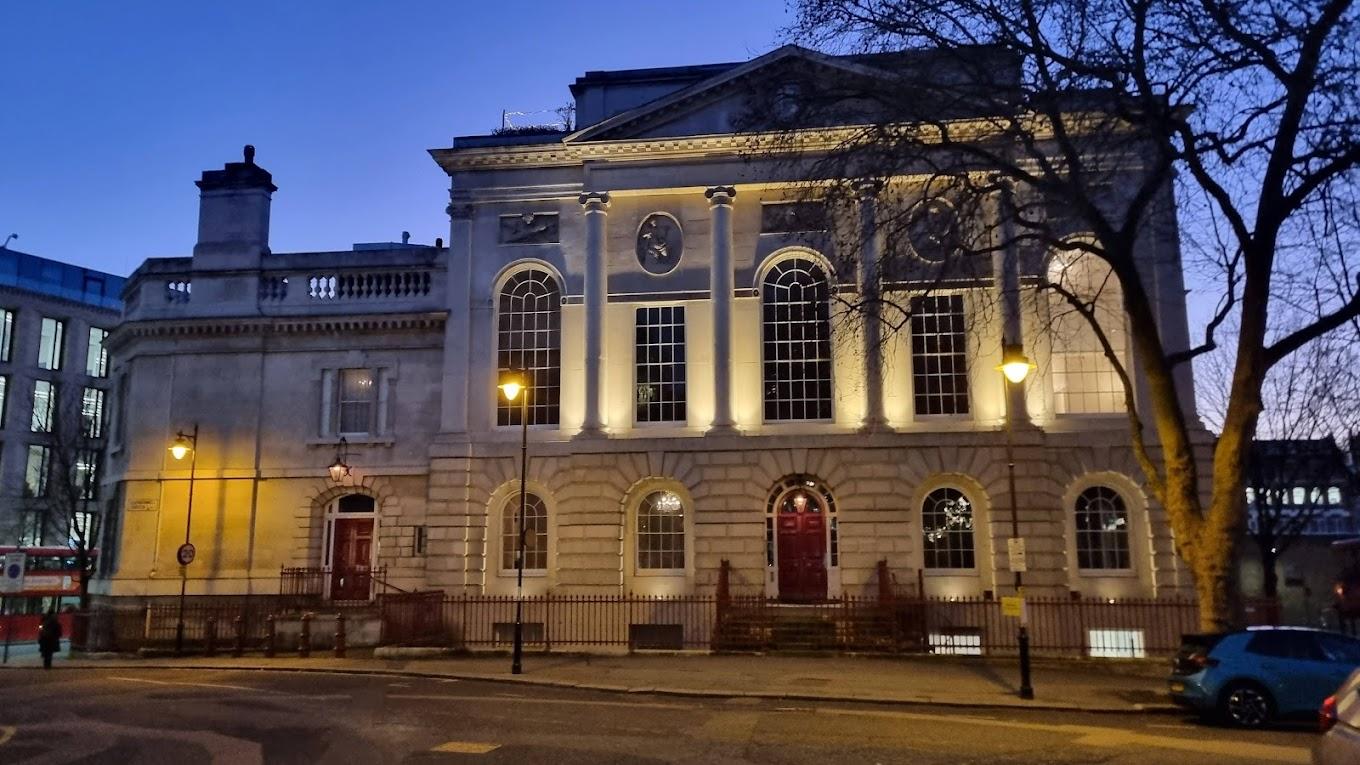
Farringdon sits between the City of London, Clerkenwell and the eastern side of Holborn. Its identity comes from the meeting of these different environments: established professional services, design studios, historic streets and a major rail interchange share a relatively compact part of Central London. The result is a business district with considerable variety, where the surroundings can change within a few minutes’ walk.
The area is closely connected to Clerkenwell, and the two names often overlap in descriptions of local offices. Farringdon is particularly associated with the station and the streets around Cowcross Street, Turnmill Street and Farringdon Road. This guide considers that wider working neighbourhood, focusing on its character, environment and place within London rather than rents or individual buildings.
Farringdon’s identity within Central London
Farringdon functions as a meeting point between different parts of the capital. To the east are the commercial streets of the City; to the north, Clerkenwell’s studios and showrooms; and to the west, the legal and professional setting around Holborn. These relationships give the area a broad business identity rather than a single dominant image.
Its appeal is also rooted in the street pattern. Smaller lanes, older commercial buildings and pockets of residential activity sit alongside substantial office developments. Farringdon feels like an inhabited neighbourhood as well as a place to commute to, although the immediate station approaches have a noticeably busier rhythm.
Business culture and professional atmosphere
The local professional environment brings together creative businesses and more conventional office occupiers. Architecture, interiors and design have a visible presence in neighbouring Clerkenwell, while consultancies, technology teams and professional services contribute to the wider mix. It is possible to work close to the City without adopting the same setting as a large financial district.
That variety supports different styles of interaction. A team may host a formal client meeting in its office, meet collaborators in a nearby café and visit a showroom during the same day. Proximity makes these changes of setting practical, but the experience depends on the particular street and building rather than the Farringdon name alone.
Architectural character and building form
Farringdon’s buildings reflect successive periods of commercial use. Brick warehouses and former workshops stand alongside Victorian frontages, converted premises and contemporary offices. Around the station, newer development introduces larger floorplates and a different scale from the narrower streets nearby.
This produces meaningful differences between workplaces. An adapted building may offer an individual entrance, exposed structure or an unusual internal arrangement. A purpose-built office may provide a more regular layout and a larger shared reception. Neither description guarantees the quality of the working environment: daylight, acoustics, access and the relationship between floors still need to be assessed at building level.
Day-to-day working environment
The station creates a clear pattern of arrivals and departures, with busy periods around commuting times and lunchtime. Cowcross Street and the principal routes towards Clerkenwell and Smithfield can feel animated, while smaller streets offer a different pace. It would be misleading to describe the whole area as either quiet or constantly crowded.
For office teams, the practical advantage is the concentration of everyday facilities. Food shops, cafés and places to meet are woven into the surrounding streets, allowing much of the working day to take place on foot. Offices directly above hospitality premises or beside major roads should be considered in that specific context, particularly where concentration or frequent calls are important.
Relationship with surrounding districts
Clerkenwell is the closest point of comparison, with a strong overlap in buildings, amenities and professional networks. Holborn provides a connection towards the West End and London’s legal quarter, while the City brings a different concentration of corporate and financial activity to the east and south-east.
These are adjoining environments rather than interchangeable labels. A workplace north of the station may feel closely connected to Clerkenwell’s design community; one nearer Smithfield or the City boundary may have a different daily pattern. When comparing locations, the actual walking routes to clients, transport and meeting venues are more useful than broad district descriptions.
Public realm and outdoor space
Farringdon is an urban location with limited large-scale green space at its centre. Its outdoor environment is largely made up of streets, small squares and churchyard settings rather than extensive parkland. Nearby places such as Clerkenwell Green and Charterhouse Square add variety to a walk, although access to individual gardens and enclosed grounds should not be assumed.
This matters when considering everyday routines. Teams that value a short walk and a change of scene can find routes through the surrounding neighbourhood, but those expecting a large public park immediately outside the office will encounter a different setting. The quality of the route from the building is therefore part of the location decision.
Cultural and institutional presence
The area’s history is visible around St John’s Gate and the streets towards Smithfield. The Museum of the Order of St John provides a direct connection with the neighbourhood’s religious and charitable heritage. These historic layers sit within an active commercial area, rather than forming a separate visitor quarter.
Design culture is another important influence. Nearby Clerkenwell Design Week connects the district’s showrooms, architecture and interiors community through exhibitions and events. Its presence helps explain the area’s professional identity, while also bringing periods of increased activity to particular streets and venues.
Hospitality and meeting context
Farringdon offers a mix of cafés, pubs and restaurants, with different settings around the station, St John Street and the adjoining lanes. This gives businesses options for a brief catch-up, a client lunch or an informal conversation after work without travelling to another district.
Convenience does not mean every venue is suitable for every discussion. Popular lunch and evening periods can make conversation more difficult, and a public table offers limited privacy. For confidential meetings or presentations, a dedicated meeting room remains a different proposition from the surrounding hospitality offer.
Accessibility and movement
Farringdon’s rail connections are a defining part of its role. The station brings together the Elizabeth line, Thameslink and the Circle, Hammersmith & City and Metropolitan Underground lines. This combination supports journeys across London and from beyond the capital, although the most convenient route depends on the traveller’s starting point and service conditions.
The interchange is not a single doorway. The Elizabeth line has access at the Farringdon and Barbican ends, so the relevant entrance can affect the final walk. Businesses should consider the journey to the actual office, including crossings and the route from the appropriate exit. Transport for London’s journey planner provides a practical way to check individual routes.
Who Farringdon aligns with
Farringdon can suit organisations that need a central meeting point while valuing a varied neighbourhood around the workplace. Teams working across creative and professional networks may find the proximity to Clerkenwell, Holborn and the City useful. Rail connections can also be relevant where colleagues and visitors arrive from different directions.
The trade-offs are equally specific. A business seeking a uniform corporate campus, extensive green space or a consistently quiet street may need to look carefully at individual options. Farringdon offers considerable choice in atmosphere, but that variety makes a visit to the precise location particularly valuable.
Farringdon’s long-term role
Farringdon combines an established urban fabric with transport infrastructure that connects it to a much wider geography. Its continued role as a business location rests on both elements: accessibility brings people into the area, while the surrounding streets give them reasons to spend time there.
Changes to individual sites can alter local routes, views and patterns of activity. The durable point is the area’s position between several important London districts. Businesses assessing it for the longer term should consider how a particular building fits their working patterns alongside the broader advantages of that position.
Farringdon in context
Farringdon offers a combination of connectivity, architectural variety and overlapping professional communities. Its character is strongest at street level, where new offices, older buildings and everyday neighbourhood uses meet. Understanding those differences is more useful than treating the area as a single office environment.
For a practical next step, you can view office space available in Farringdon and compare individual buildings against your team’s travel, meeting and working requirements.