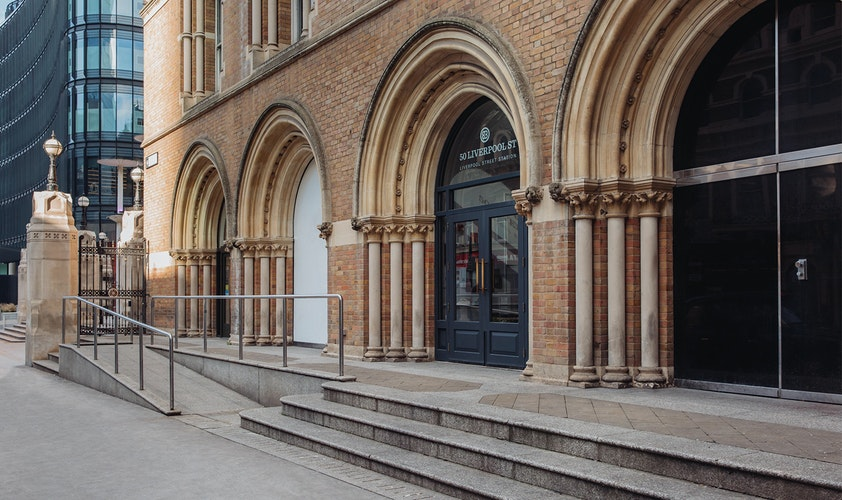
Liverpool Street sits at the meeting point of the City of London, Spitalfields and the routes towards Shoreditch. Its station is a major point of arrival, while the surrounding streets bring together substantial office buildings, historic commercial premises and a varied hospitality offer. The area’s identity comes from this overlap of transport, business and neighbourhood life.
The name describes a wider office catchment as well as a particular street. Broadgate, Bishopsgate and the lanes towards Spitalfields each offer a different setting. This guide considers that working environment and the relationships that make Liverpool Street distinct.
Liverpool Street’s identity within London
The station gives the area a clear metropolitan role. People arrive from across London and beyond, then disperse towards offices, shops and neighbouring districts. Liverpool Street therefore functions both as a destination and as a gateway into the eastern side of Central London.
Outside the station, the atmosphere changes quickly. Corporate entrances and larger developments sit close to smaller streets with restaurants and older buildings. This variety allows businesses to remain close to the City while choosing a setting with a different relationship to street life.
Business culture and professional atmosphere
The City’s commercial networks have a strong influence on the area. Professional services, finance and other office-based businesses share the neighbourhood with a broader range of occupiers. Proximity can be useful for teams whose working day includes meetings across the Square Mile.
The relationship with Spitalfields and Shoreditch adds another dimension. A business can receive a client in a formal office environment and move to a less formal setting nearby afterwards. That range of settings is part of the appeal, although no single street represents the whole area.
Architectural character and building form
Liverpool Street’s surroundings combine large contemporary offices with older stone and brick buildings. Broadgate introduces substantial development and managed public spaces, while Bishopsgate forms a major urban corridor. Smaller lanes offer a different scale, often with narrower frontages and more visible independent premises.
Office choice consequently involves more than selecting a postcode. Floorplate size, reception arrangements, outlook and the degree of separation from public activity vary between buildings. An office in a tower and one in an adapted property may support quite different working routines.
Day-to-day working environment
Commuter movement is especially visible around station entrances and principal routes. Lunch periods bring additional activity as workers use nearby shops and food venues. Deliveries, buses and other traffic contribute to the experience along the larger roads.
Away from those corridors, pedestrian streets and smaller courts can provide a more contained environment. The most useful comparison is between actual entrances and approaches. A short walk from the station may involve a busy crossing or a complicated route that is not apparent from a headline distance.
Relationship with surrounding districts
The City extends south and west, with commercial networks around Bank, Moorgate and the insurance district within the wider walking catchment. Spitalfields lies to the east and north-east, while Shoreditch introduces a different mix of creative businesses, hospitality and nightlife further north.
This position makes Liverpool Street a useful point of overlap for teams working across these communities. It also means that offices marketed under the same area name can feel quite different. The side of the station and the direction of regular meetings both matter.
Public realm and outdoor space
The area includes managed squares, pedestrian routes and smaller gardens alongside its busy roads. Spaces around Broadgate provide places to sit and move between buildings, while the wider City contains additional garden settings. These are distinct from the experience of a large open park.
For everyday use, seating, shelter and the route from the office are often more relevant than the scale of a space on a map. Private terraces and shared building amenities should be assessed separately, as their access arrangements may differ from those of the public realm.
Cultural and neighbourhood presence
Spitalfields’ market setting and historic streets add a strong local identity beyond the station. The relationship between long-established buildings and newer commercial activity is visible throughout the wider neighbourhood. Cultural life is woven into shopping, food and public movement rather than concentrated in one institution.
The Barbican provides a major cultural destination further west within the wider City. Together, nearby neighbourhood activity and the Square Mile’s institutions give office teams options that extend beyond the immediate business district.
Hospitality and meeting context
Liverpool Street has a substantial choice of cafés, restaurants, pubs and hotels. The station catchment supports quick meetings and visitor arrivals, while surrounding streets offer settings for longer conversations. Different venues serve commuter, business and evening demand in different proportions.
Busy periods can affect noise and availability. For frequent client meetings, dependable bookable space may be more useful than a large number of nearby cafés. An office’s own meeting rooms remain important where discussions involve privacy, presentations or several participants.
Accessibility and movement
Liverpool Street brings together National Rail, the Elizabeth line, Underground services and London Overground services. The interchange gives the area broad connections, but the useful route for each person depends on the line, station entrance and final destination.
Movement within the wider neighbourhood is often practical on foot. Bishopsgate and the station approaches can nevertheless create busy crossings and concentrated pedestrian flows. Transport for London’s journey planner helps compare routes from staff and client starting points.
Who Liverpool Street aligns with
The area can suit businesses that need a well-connected City base and receive visitors from different directions. It is also relevant to teams whose professional relationships span the Square Mile and the neighbouring eastern districts.
A consistently secluded setting is less characteristic of the immediate station area. Businesses requiring quiet should examine internal acoustics and the exact street frontage. The strongest choice balances transport convenience with the atmosphere needed inside the workplace.
Liverpool Street in context
Liverpool Street’s value lies in the combination of a major interchange and several distinct urban settings around it. It offers access to established commercial networks without limiting every workplace to the same architectural or social environment.
For a practical next step, you can view office space available around Liverpool Street and compare individual buildings and approaches.